QUICK MENU

boat design site of the month 

HOME
 

design award 

DESIGN AWARD
 

design award archive 2003 

2003 ARCHIVE
 

design award archive 2002 

2002 ARCHIVE
 

design award archive 2001 

2001 ARCHIVE
 

design award archive 2000 

2000 ARCHIVE
 

design award archive 1999 

1999 ARCHIVE
 

search the boat design and boatbuilding directory 

BOAT DESIGN DIRECTORY
 

BOAT DESIGN

design projects 

FORUMS
 

marine design software 

GALLERY
 

design projects 

DESIGN PROJECTS
 

design articles 

DESIGN ARTICLES
 

marine design software 

SOFTWARE
 

schools 

SCHOOLS
 

boat design books 

BOOKS - DESIGN
 

BOATBUILDING

plans 

BOAT PLANS
 

materials 

PROJECTS
 

materials 

SMALL BOATS
 

boatbuilding articles 

BOATBUILDING ARTICLES
 

materials 

MATERIALS
 

boatbuilding books 

BOOKS - BOATBUILDING
 

POWERBOAT INDEX

catamarans 

CATAMARANS
 

v-hull powerboats 

V-HULLS
 

engines and drives 

PROPULSION
  

INFORMATION

newsgroups 

NEWSGROUPS
 

magazines 

MAGAZINES
 

calendar of events 

CALENDAR OF EVENTS
 

other directories 

DIRECTORIES
 

link us 

WEB DESIGN
 

link us 

LINK US
 

contact 

CONTACT
 

site map 

SITE MAP
 

search 

SEARCH
 

Boatbuilding Articles

See also: Design Articles

PHILBROOK'S BOATYARD RESTORATION OF THE MOTOR YACHT CANIM
AUGUST 2002

Foam Core Materials in the Marine Industry

Philbrooks Boatyard
 

Built in 1930, the Canim was an immediate head turner. She was one of four 96 footers built by Lake Union Drydock to an L.E. (Ted) Geary design. Geary was already a seasoned Naval Architect when he was commissioned to draw Canim for Seattle Times publisher, Col. C. B. Blethen. Blethen wanted to go yachting in style and Geary's design would be the toast of the Seattle Yacht Club. After all, in those days 96' yachts were rare. Her impressive length aside, Canim presented a unique challenge for the Philbrook's team. Their job was essentially to reverse the clock, with a goal no less ambitious than to restore the yacht's very soul.

Philbrooks Boatyard restoration of the motor yacht Canim 

PHILBROOK'S BOATYARD RESTORATION OF THE MOTOR YACHT CANIM
CLICK HERE TO READ THE FULL ARTICLE


FOAM CORE MATERIALS IN THE MARINE INDUSTRY
APRIL 2002

Foam Core Materials in the Marine Industry

DIAB, Inc.
 

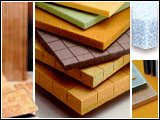
For over 60 years foam cores have been utilized in marine applications to lighten, stiffen, and strengthen everything form hull bottoms to fly bridges. But what exactly is foam core? What type do I use, and where can I use it? Should I use it instead of balsa or plywood? With the seemingly endless variety of foam core materials on the market today, it can be frustrating for the average boating enthusiast to find the right foam core for his/her particular application. This article will attempt to inform boat builders about the properties and correct manufacturing procedures involved in constructing foam core sandwich laminates.

Foam Core Materials in the Marine Industry 

FOAM CORE MATERIALS IN THE MARINE INDUSTRY
CLICK HERE TO READ THE FULL ARTICLE


CALL FOR ARTICLES

We would like to begin featuring design articles on a more regular basis covering a wide variety of subjects which would be of interest to professional designers, design students, and the general public as they select their next yacht or as they chose a designer and builder to realize their dream.

If you are a designer, boatbuilder, or involved in the marine industry and would like to contribute an article to be included on Boat Design Net, please contact us.

To get the process started, we have come up with a preliminary topic list, but only to provide an idea of the type of articles we are interested in featuring. The following list is just a start.  If you might be interested in contributing an article, we welcome your suggestions.

Design:
Air-entrapping hulls
Step design.
What's the next evolutionary step for the catamaran or tunnel hull forms?
Wave piercing hulls
Hydrofoils
Fast Ferries
Reduced-wake design
Surface effect vehicles (and the winged "bat boats")
New design software.

Boatbuilding:
New Composite Manufacturing Techniques
VEC molding, CAD/CAM/CNC vs. traditional boatbuilding, the advantages of traditional materials such as wood and cold molded hulls, alternate homebuilding techniques, environmental concerns, vacuum techniques, the future of composite construction.

Career Paths for a Naval Architect. A look at how a young Yacht Designers should get started, both in terms of theoretical and practical education and paths into the industry, small boatbuilders, custom one-off and limited production yacht construction.

We would like to arrange to publish articles on a wide variety of subjects, certainly not limited to the above.  In return, we will offer authors and contributors publicity (5000 page views per day), prominent links to your web site and/or contact information, and any web services which might be requested or required. We look forward to your input.

Sincerely,
BoatDesign.Net
webmaster@boatdesign.net
 

OTHER DESIGN ARTICLES

5-Axis Milling for Plugs, Molds, and Tooling
A Design Revolution
A Multihull Sampler
A Performance Prediction Model for Rowing Races
Aluminum for Boats
Aluminum vs. Steel
Anthony Steward - Around Alone in an Open Boat
Automatic Hull Variation and Optimization
Beam vs. Ballast for Seakeeping
Boojum's Twin Keels
Choice of Construction Material
Computer Cutting For Boat Building
Computer Prototyping and Development
Controllable Pitch Propellers
Cool New Gimmicks... - A Cautionary Tale
Cost Effective Research & Development
Downwind Performance of Yachts in Waves
Engineering the Sailboat—Safety in Numbers
Essential Design Data
Estimating Boat Building Costs
Feasibility of Lift Dumping Foils for High Speed Ferries
Free Standing Rigs
Free-Surface Pressure Distributions with Minimum Wave Resistance.
Good N.E.W.S. - New Epoxy Wood System
Hydrodynamic Drag of Small Sea Kayaks
Hydrodynamic Drag of Some Small Sprint Kayaks
Hydrofoil Basics - A Brief Tutorial
Ideal Passagemaker Hull Form
Investigation into Wave Loads on Catamarans
IRM in the USA
Laminate Analysis - Upgrading with Reduced Risk
Low Drag Racing Kayaks
Low Drag Rowing Shells
Metal Boats for Blue Water
Mindset and Goal Setting for Amateur Boatbuilders
NC Parts Cutting Example
New Life for Amnesia
Optimum Hull Spacing of a Family of Multihulls
Plywood Boat Building
Radius Chine Plywood Construction
Radius Chine Steel Construction
Reverse Engineering 3D Computer Hull Shapes From 2D Lines and Offsets
Revisiting a Mast-Aft Sailing Rig
Roll Reduction Strategies
Rowing Shell Drag Comparisons
Sea Wave Pattern Evaluation - Part 1: Primary Code and Test Results
Sea Wave Pattern Evaluation - Part 2: Investigation of Accuracy
Sea Wave Pattern Evaluation - Part 3: Near-Field Waves
Sea Wave Pattern Evaluation - Part 5: Speed-up and Squat
Sea Wave Pattern Evaluation - Submarine Portfolio
Sea Wave Pattern Evaluation - Submarine Portfolio: 10 knots
Sea Wave Pattern Evaluation 4: Extension to Multihulls and Finite Depth
Ship-wave Patterns in the Spirit of Michell
Small, Low Drag, Solar-Powered Monohulls and Multihulls
Stock Boat Designs
The Advantages of Twin Keels
The Basics of Bulbous Bows
The Case for Lofting
The Design Spiral for Computer-Aided Boat Design
The Dirty Little Secrets of Hull Design by Computer
The Ideal Motor Sailor
The Junk Rig
The New U.L.D.B. Sailboats
The Yacht Design Process
To Home Build or Not
Trailerable Trawlers
Vessel Specification
Water Ballast - Race Boat Applications
What is a Sport boat?
What's the Ideal Sailing Rig?
Windward Performance of the AME CRC Stematic Yacht Series - Part 1
Windward Performance of the AME CRC Systematic Yacht Series - Part 2

More Design Articles
 

Boat Design Net - Click Here to Return to Homepage